
Hardware-aware local AI operations
Professional model selection for builders, operators, and platform teams.
LLMFit inspects CPU, RAM, GPU, VRAM, and local runtimes, then ranks which open models can actually run on a given machine. It turns vague hardware guesswork into an operational answer you can use in a terminal, API, or internal workflow.
$
curl -fsSL https://raw.githubusercontent.com/miounet11/llmfit/main/install.sh | sh
LLMFit is based on the original MIT-licensed engine by Alex Jones and has been packaged here as a more complete, deployment-ready open-source product.
What it does
Turn local AI sizing into a repeatable process.
LLMFit is not another generic model list. It ties model choices to the hardware and runtime conditions that decide whether a local deployment is usable, slow, or impossible.
Inspect the machine
Detect system RAM, CPU topology, GPU type, VRAM, backend, and installed local providers before recommending anything.
Rank what really fits
Score models across fit, speed, context, and quality dimensions instead of pretending every machine can run every model family.
Operationalize the answer
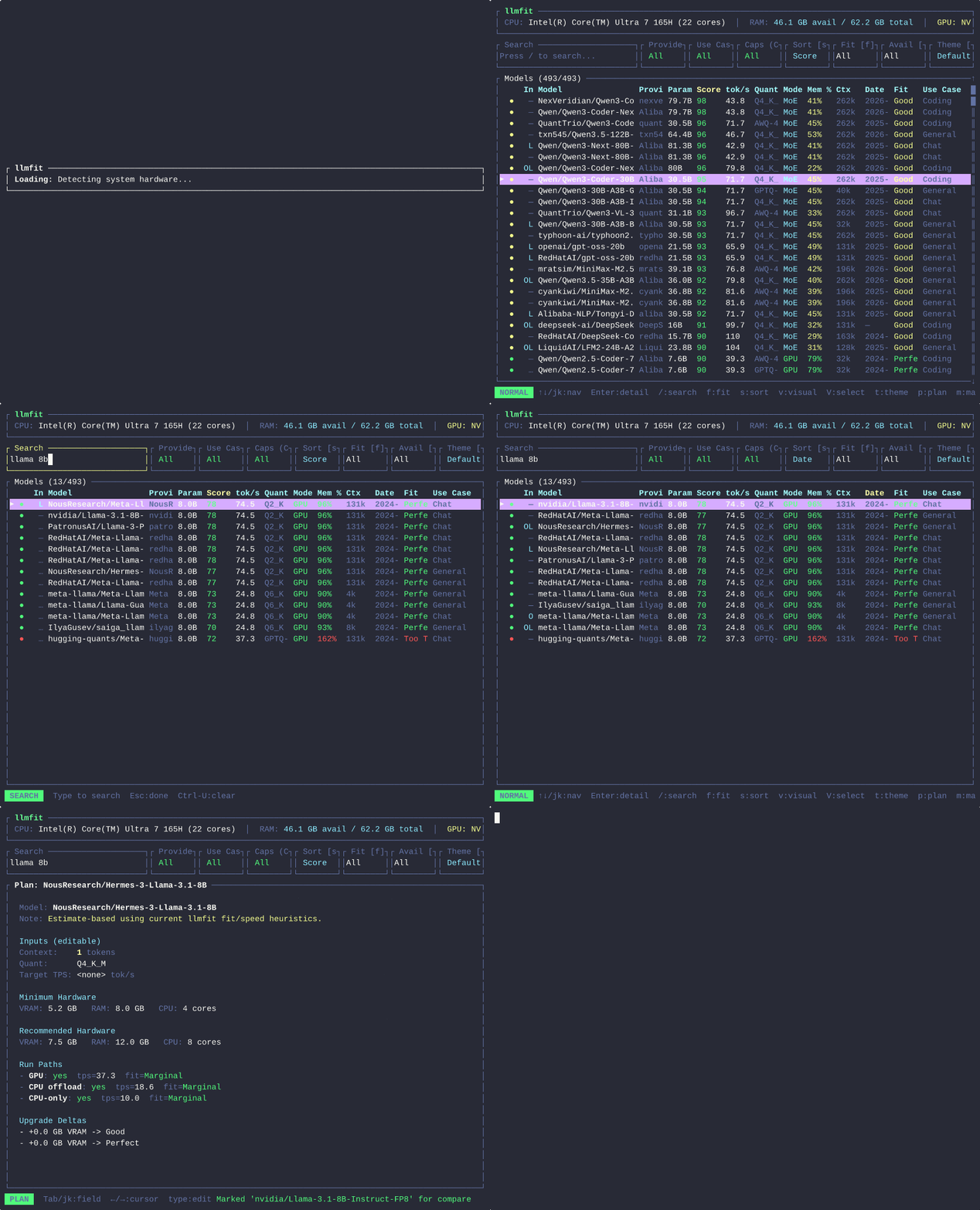
Use the TUI interactively, script the CLI, or expose the same fit analysis through a node-local REST API.
Plan before you buy
Use planning mode to estimate the RAM, VRAM, and CPU needed to hit a target model and throughput instead of purchasing hardware blindly.
Who it serves
Built for real local AI workflows.
The product direction here takes cues from tool-first, high-adoption open source projects like Ollama, uv, and Open WebUI, but focuses specifically on model-to-hardware fit.
Local AI builders
Validate whether a laptop or workstation can run a coding, reasoning, or multimodal workflow before pulling a model.
Platform teams
Standardize which models belong on which nodes and expose that answer to internal dashboards, schedulers, or setup flows.
Consultants and operators
Turn “what should we run on this hardware?” into a professional recommendation process backed by a repeatable tool.
Homelab and edge users
Choose practical local models for constrained memory budgets and mixed environments instead of relying on benchmark marketing.
Interfaces
Use the surface that matches the job.
TUI
Filter, compare, and inspect recommendations live from the terminal, including plan mode for hardware estimation.
llmfitCLI
Generate JSON or table output for scripts, setup automation, and repeatable operational checks.
llmfit recommend --json --use-case coding --limit 5REST API
Run `llmfit serve` on a node and let schedulers, agents, or portals consume the same fit analysis over HTTP.
llmfit serve --host 0.0.0.0 --port 8787Desktop
Use the macOS desktop wrapper when you want the same fit logic in a more graphical environment.
cargo tauri buildSite map
Everything needed for a standalone professional property.
The site now covers product positioning, technical documentation, API integration, self-hosting, and buyer-style comparison content.
Docs
Product overview, fit logic, interfaces, and system model.
Use Cases
Professional workflows for builders, operators, and platform teams.
API
Serve mode endpoints, query parameters, and integration examples.
Self-Host
Binary, container, and static site deployment guidance.
Compare
Where LLMFit fits relative to model lists, benchmarks, and runtimes.
FAQ
Operational answers for teams evaluating local AI workflows.
Insights
Programmatic editorial pages targeting real local AI search intent.
Open source, deployment ready
Prepare the product now. Point the domain when DNS is ready.
The repository already contains the binary tooling, the marketing/docs property, deployment notes, and server-side rollout path.